About
urban whakapapa
urban whakapapa is a storytelling kaupapa and ongoing wānanga with a generation of urban Māori in Tāmaki Makaurau. I use storytelling as a way to wānanga our experiences as urban Māori — capturing and sharing our stories and lived experiences.
urban whakapapa is both personal and collective. It holds my own photography, writing and reflections alongside stories made with my whānau and wider urban Māori communities. Together, they are building a body of work grounded in our own experiences, voices and kaupapa.
The concept of urban whakapapa emerged through my master’s study in 2015 as a way to describe my own experiences growing up urban Māori in Tāmaki Makaurau. I first used it to describe my Māori-medium education pathway and to acknowledge the kura, Māori language units, whānau and communities I am connected to.
I think of urban whakapapa as the layers of relationships and experiences that connect us in an urban environment. It helps us to reflect on our experiences and tell the story of our urban whakapapa.
Deane-Rose Ngatai-Tua
Wahine Māori, Ngāti Porou, Waikato-Tainui, Pākehā
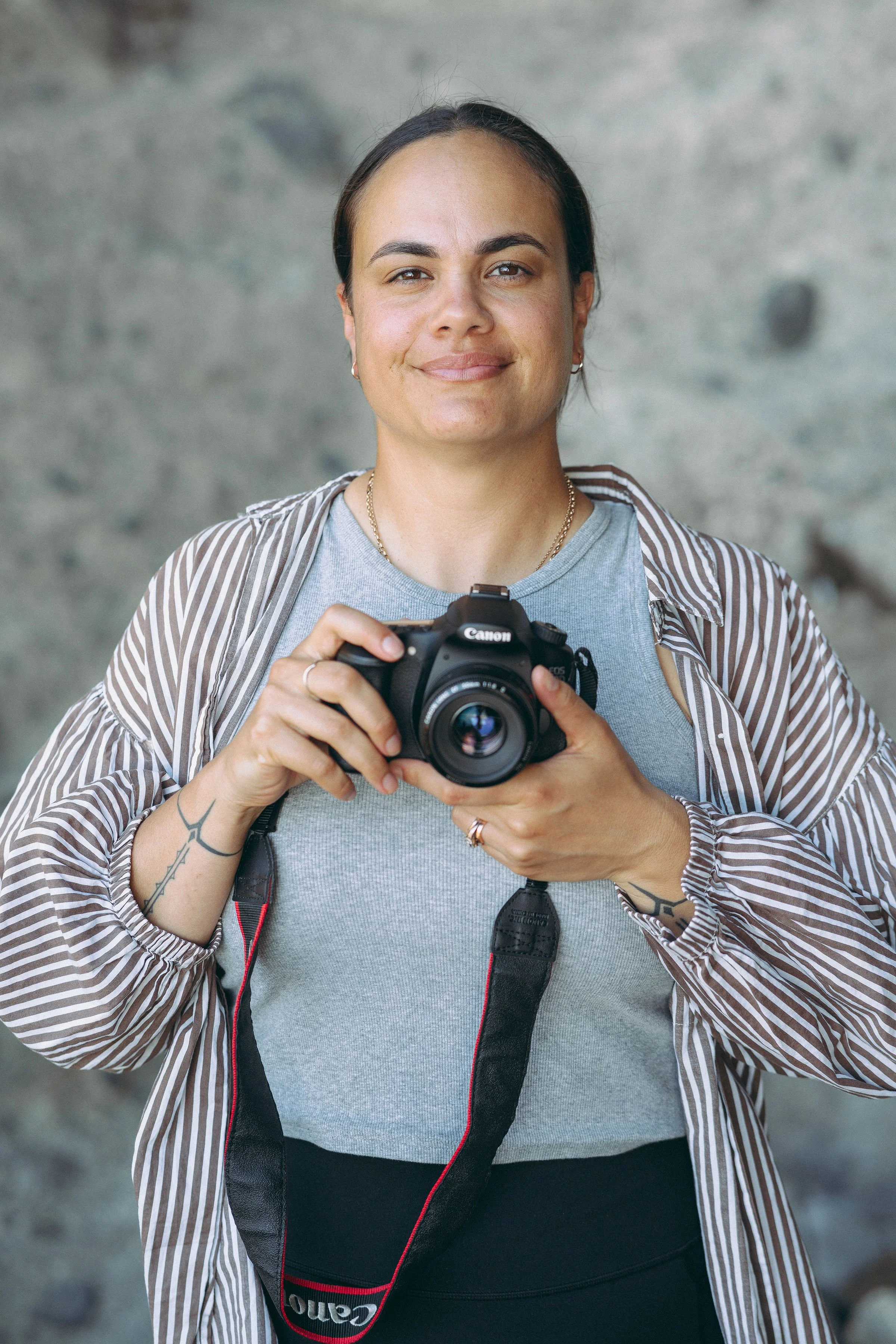
I’m the storyteller, photographer and writer behind urban whakapapa. I grew up in Rānui and now live in Kelston, Tāmaki Makaurau, with my husband and our two tamāhine. I describe myself as urban Māori.
I was raised in Māori-medium education from primary through to secondary school before studying design and visual arts. My creative practice is grounded in photography and storytelling.
Alongside my creative practice, I work in social change and community development. I work independently through my pakihi, Uia Te Kura, an urban Māori consultancy working with organisations and communities to understand lived experiences and design urban Māori futures.