Amber Ngatai shares her pūhoro journey
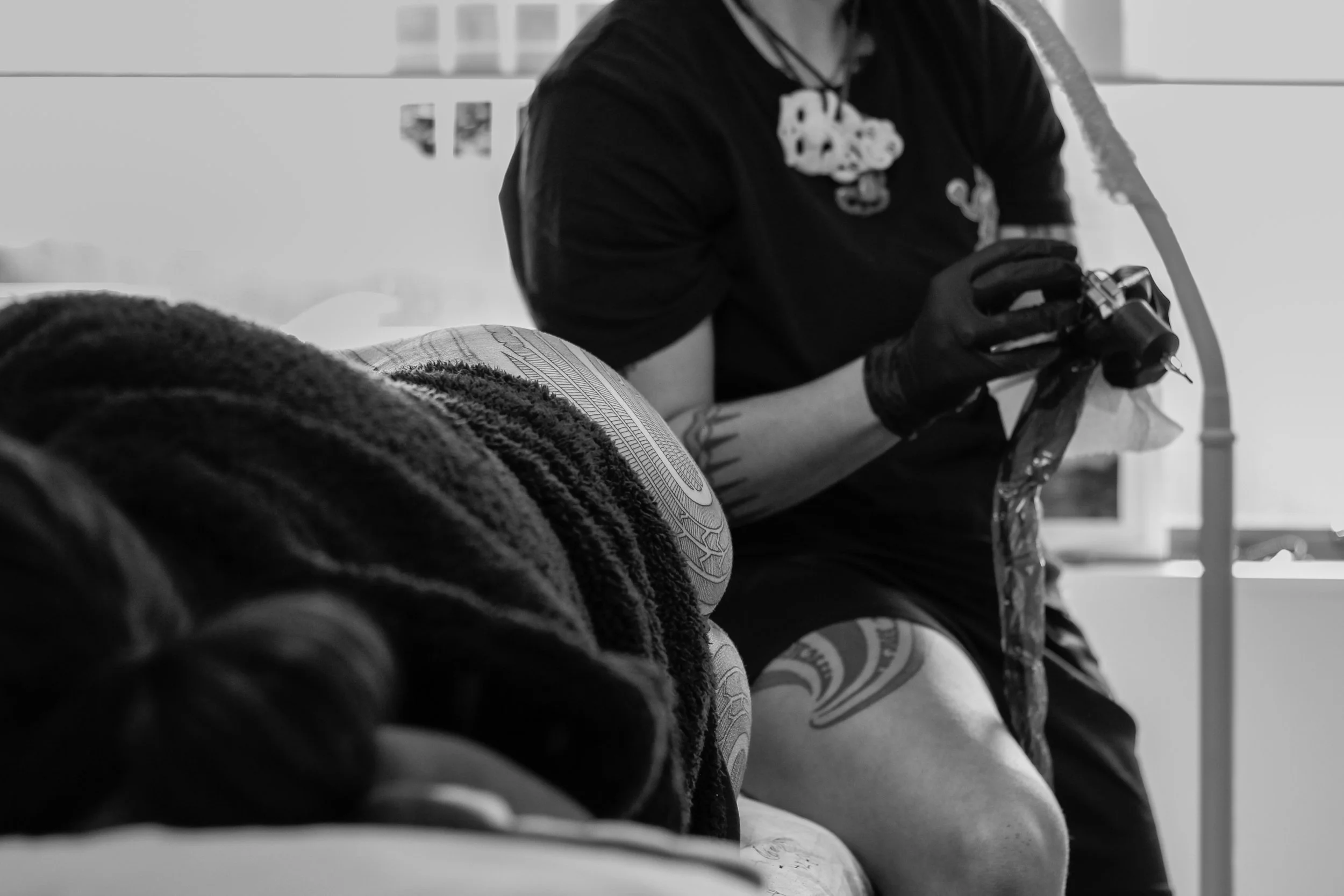
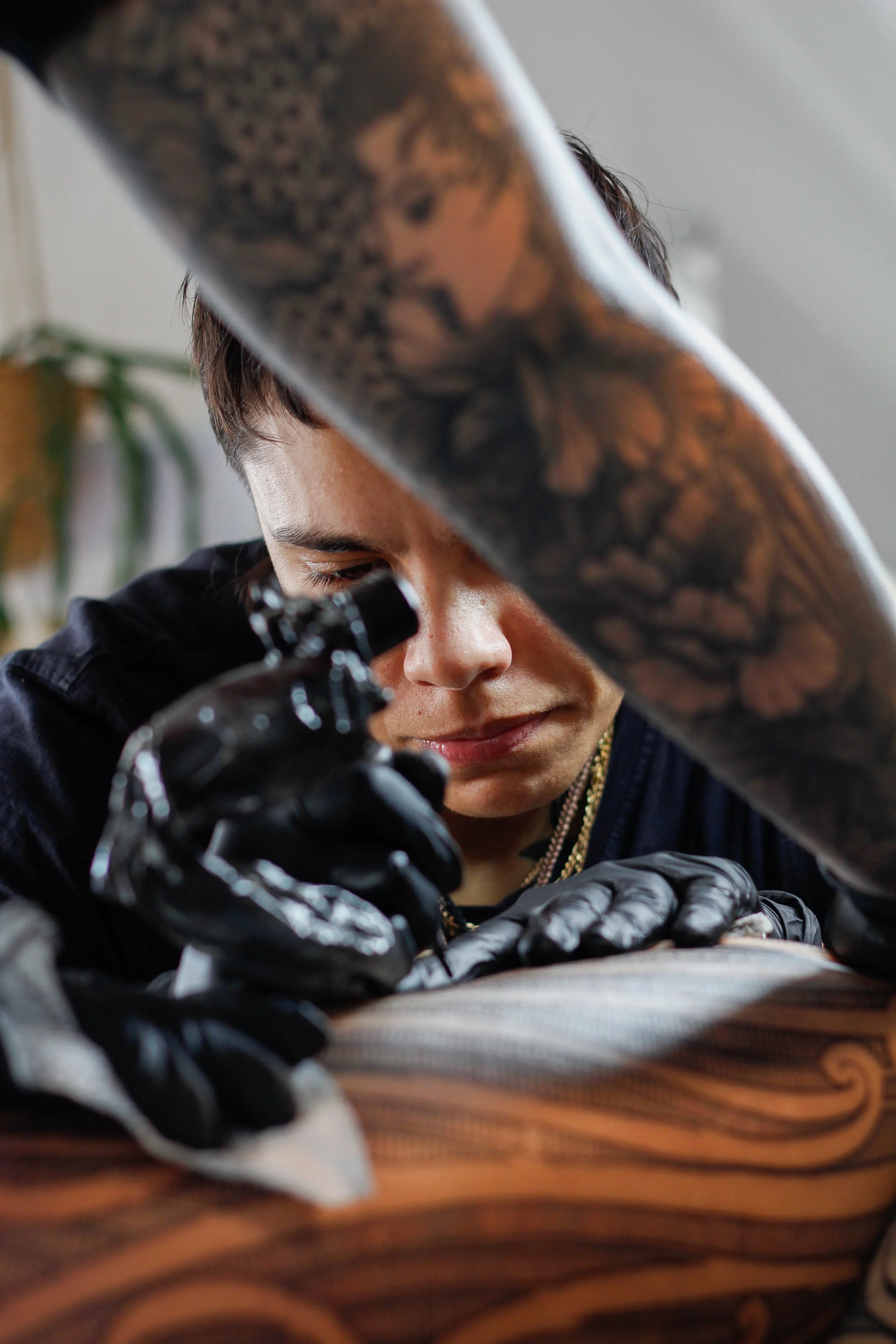
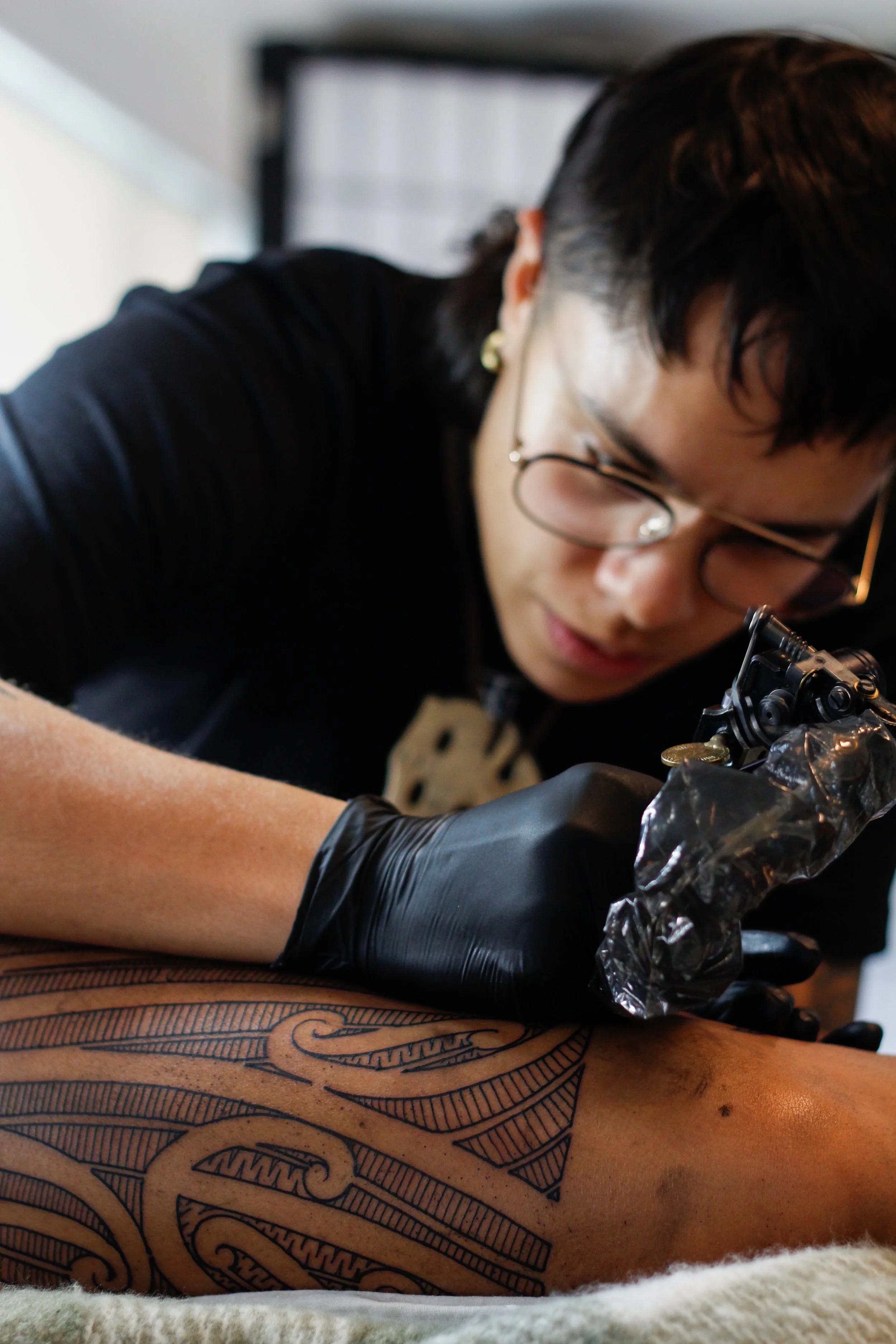
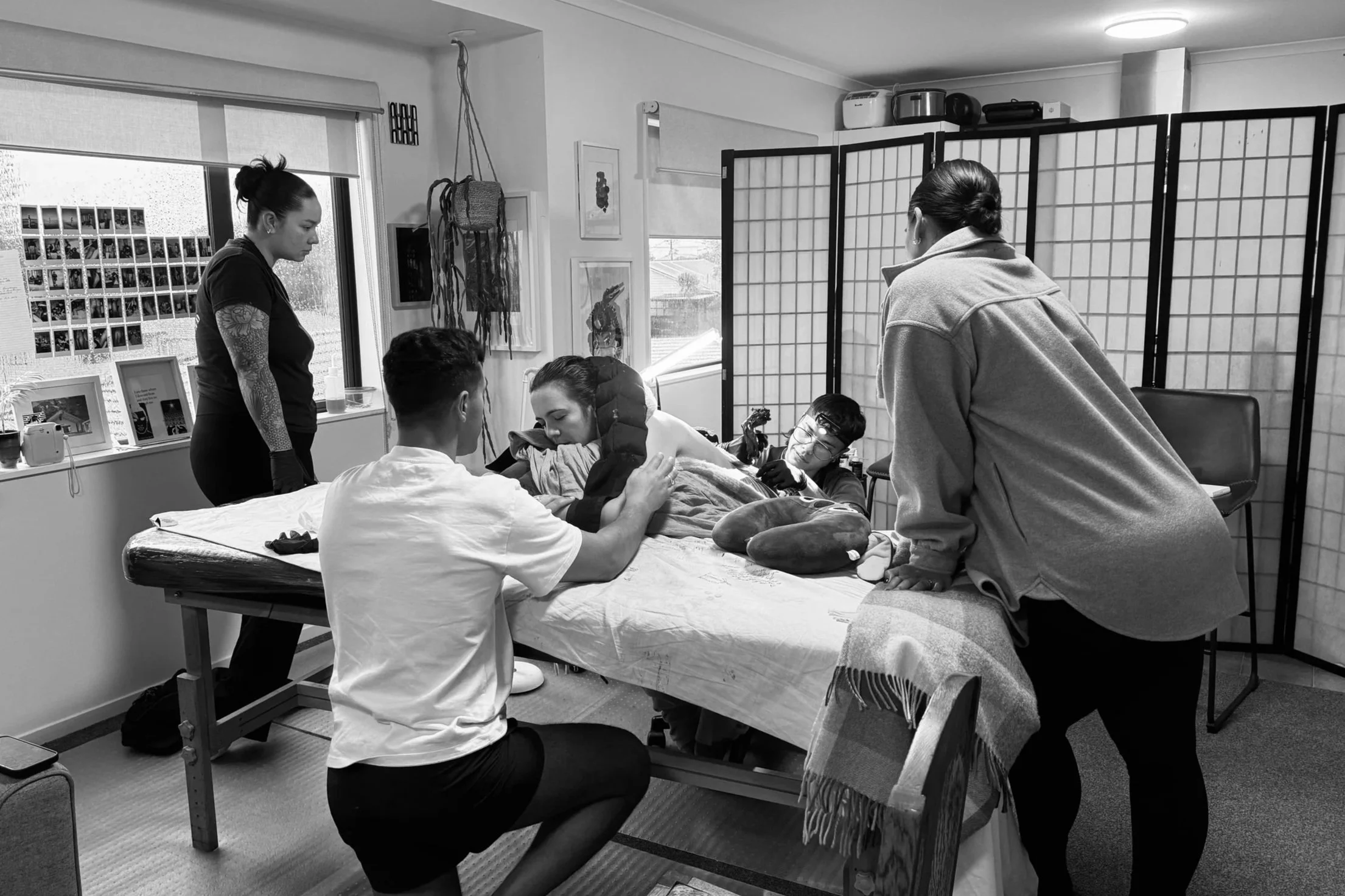
Marking Matariki in June 2024, my sister Amber received her pūhoro at her home in Rānui from tā moko artist Flows by Rau – our youngest sister Fern.
This was the second pūhoro wānanga in our whānau, following the pūhoro of my husband Jarrod in March 2024. As I did for Jarrod, I also captured images throughout Amber’s wānanga to archive our experiences of reclamation and moments of transformation as urban Māori in Tāmaki Makaurau.
Almost a year after receiving her pūhoro in May 2025, I sat down with Amber to reflect on her experience, the journey, and everything the pūhoro has come to mean to her. We share Amber’s story now in the season of Matariki – July 2026, marking the second anniversary of receiving her pūhoro, and six months after giving birth to her first tamaiti.
Amber’s words – raw and unfiltered – are shared here alongside my images.
Do you want to start by sharing a bit about your whakapapa and where you grew up?
Dads from the East Coast. Our marae is Hinerupe and hapū is Te Whānau a Hinerupe. I was born and bred in Tāmaki, in Rānui. We have been disconnected from the coast since we were born and we are still learning and trying to reconnect those ties.
We went to kura through bilingual units so learnt te reo me ōna tikanga through school. Thankfully, due to our parents making that step for us compared to the majority of our whānau who didn’t have the opportunity. We're very fortunate that they both made that decision. Mum is a Kiwi from New Zealand. We need to learn more about her whakapapa, and Fern has started to take those steps. We grew up in the suburbs, just very much Auckland through and through.
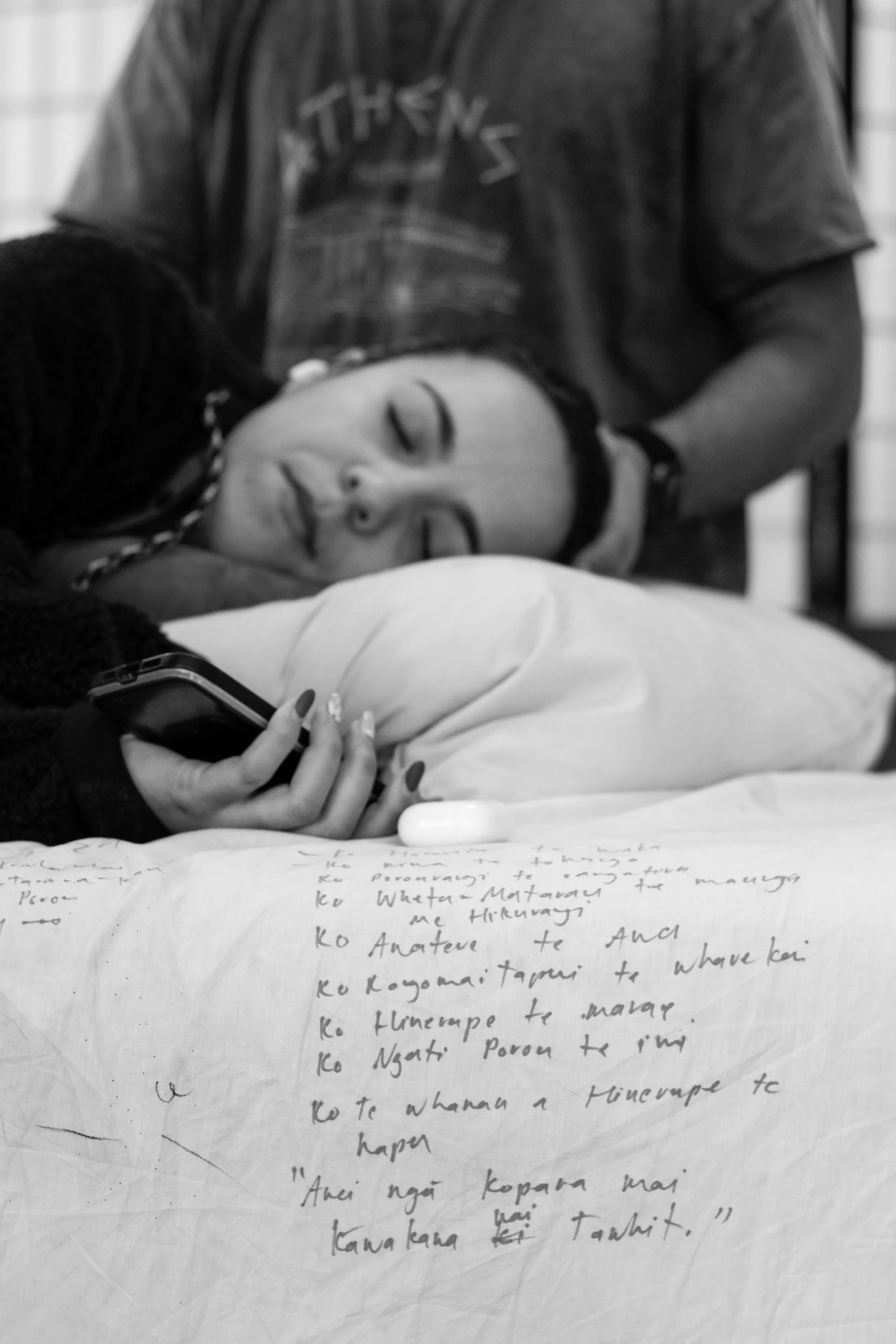
Do you identify as urban Māori?
One thousand percent, yeah.
Why do you identify as urban Māori?
There was a whole shift of Māori where they migrated away from their whenua or their tūrangawaewae and that's at various points in history. For us, it was our Pop’s generation who were the ones that were beaten for speaking Māori and told ‘Māori is not cool’, that ‘the only way to succeed is to be Pākehā’. They had the effects of colonisation thrown at them. That's where we've landed today. Migrated away from our home and into the cities and where everything is colonised around us.
So initially our way of connecting was through kura and wherever that kura had whakapapa to, which ever iwi or whoever was running that kura at the time, or the land that we were on. That was our connection to the whenua compared to somebody else who was brought up on their whenua.
What does the term urban Māori mean to you?
I think it's an effect of colonisation on a group of people who have had similar upbringings and similar experiences. It gives us an extra layer of having to reconnect back to our tūrangawaewae and to find our connections and whakapapa. It's sad because, if you have mates and they’re like ‘oh yeah, I was back at the marae’, or ‘we did this when we were kids’… we’ve had no connections, we can’t relate to that. Other than through kura, if we were having a wānanga somewhere. I would say it’s difficult.
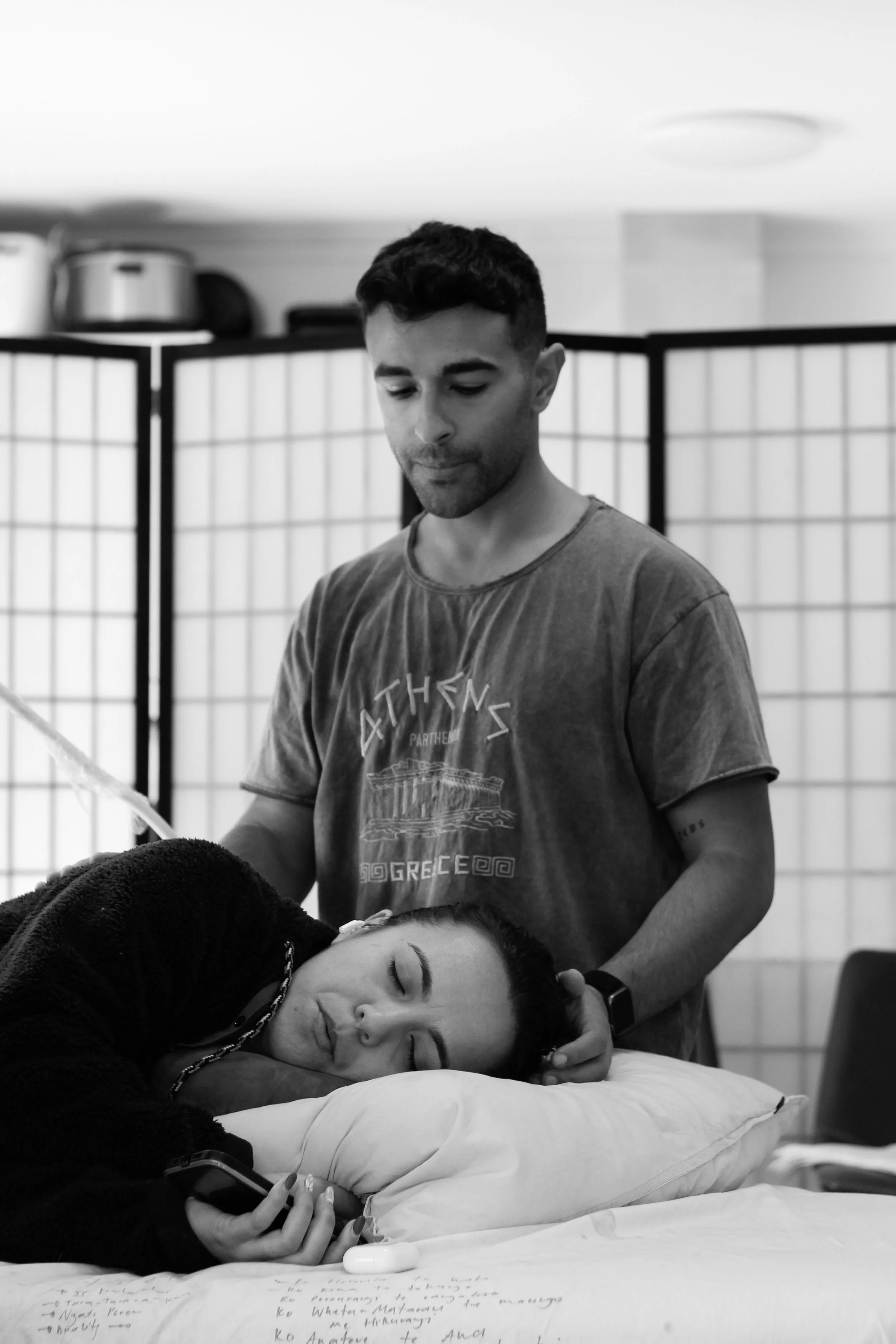
Over Matariki in 2024, you undertook a six-day wānanga to receive your pūhoro from our sister Fern aka Flows By Rau. Tell me about that journey, what led you to receiving your pūhoro?
I think we were both at that point in our lives, we were just ready. Things lined up. In the back of my mind, I had always wanted one [pūhoro]. At that time in my life, I felt more connected to it than to moko kauae.
But I definitely wanted to do it before I had kids. That was another driver. We were on the journey to expanding our whānau and starting that new chapter. It was one way of me reclaiming who I am, my whakapapa, and wearing that on my skin.
Because we're disconnected, a big part of me wanted to mau pūhoro so that when I give birth, the first thing my baby will see in this colonised world is the markings of their tīpuna and whakapapa.
That was one of my main drivers to do it. But also, in preparation for labour and delivery, because I wanted to test myself mentally and physically. It was a huge physical change as well, like you go through when you're hapū.
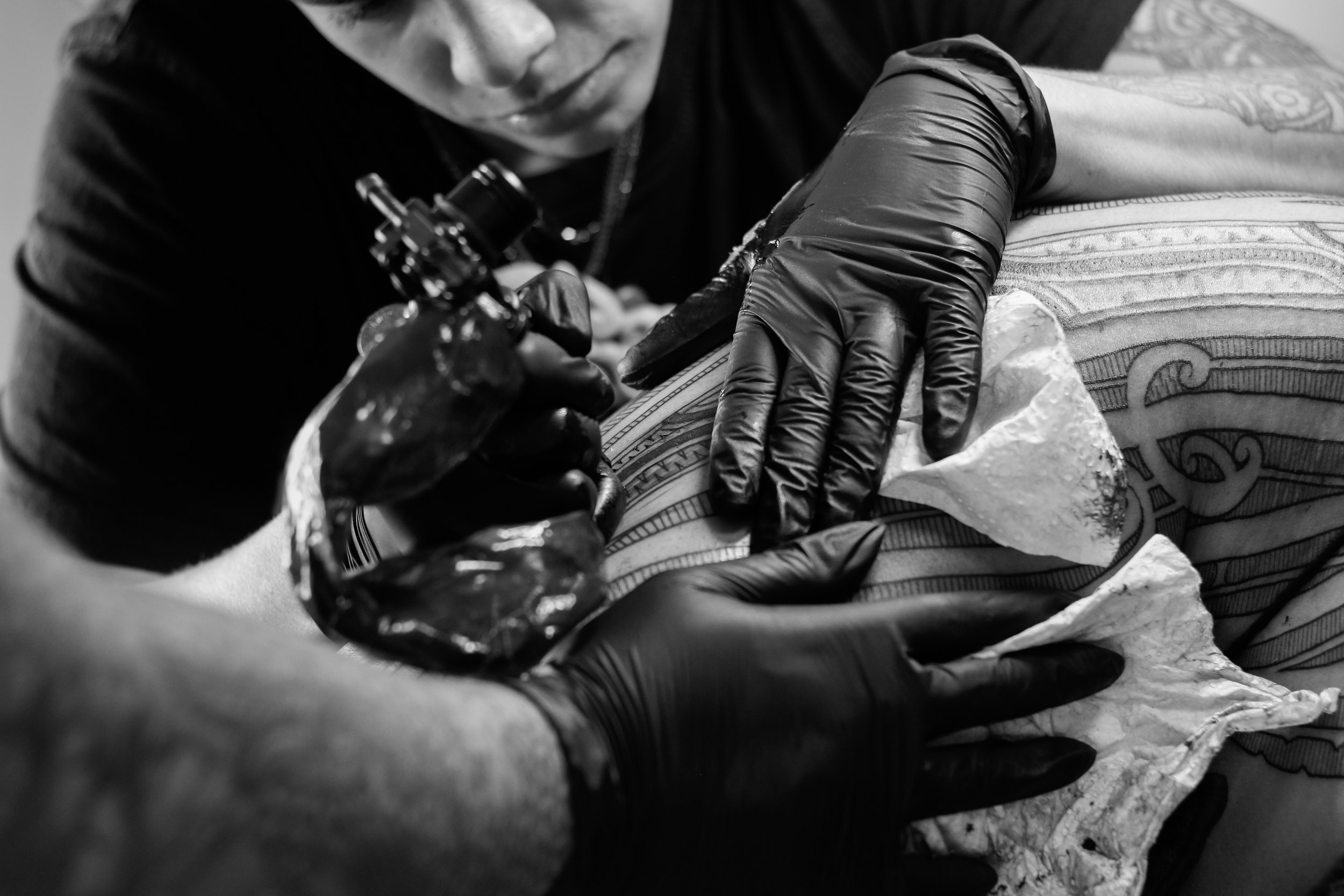
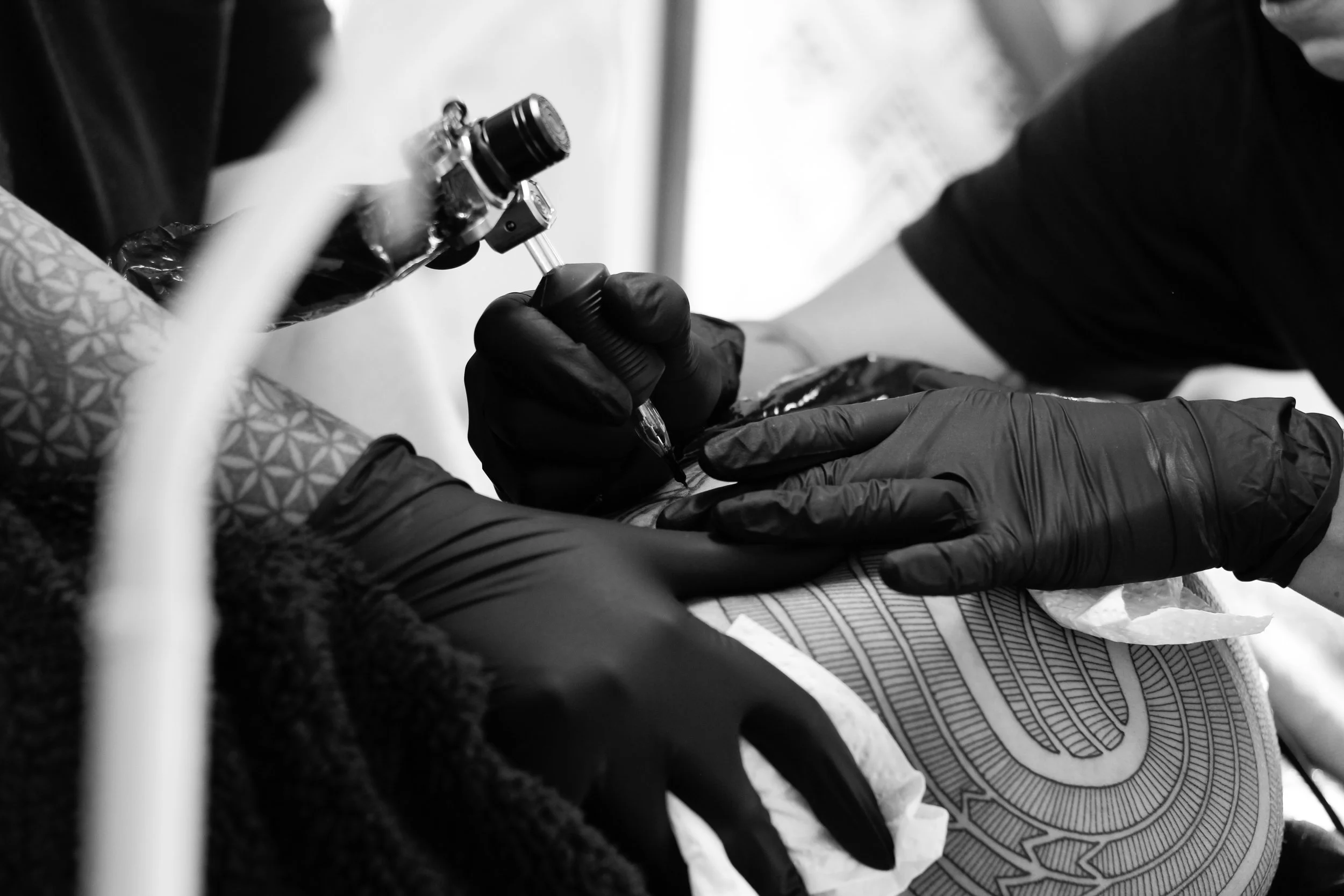
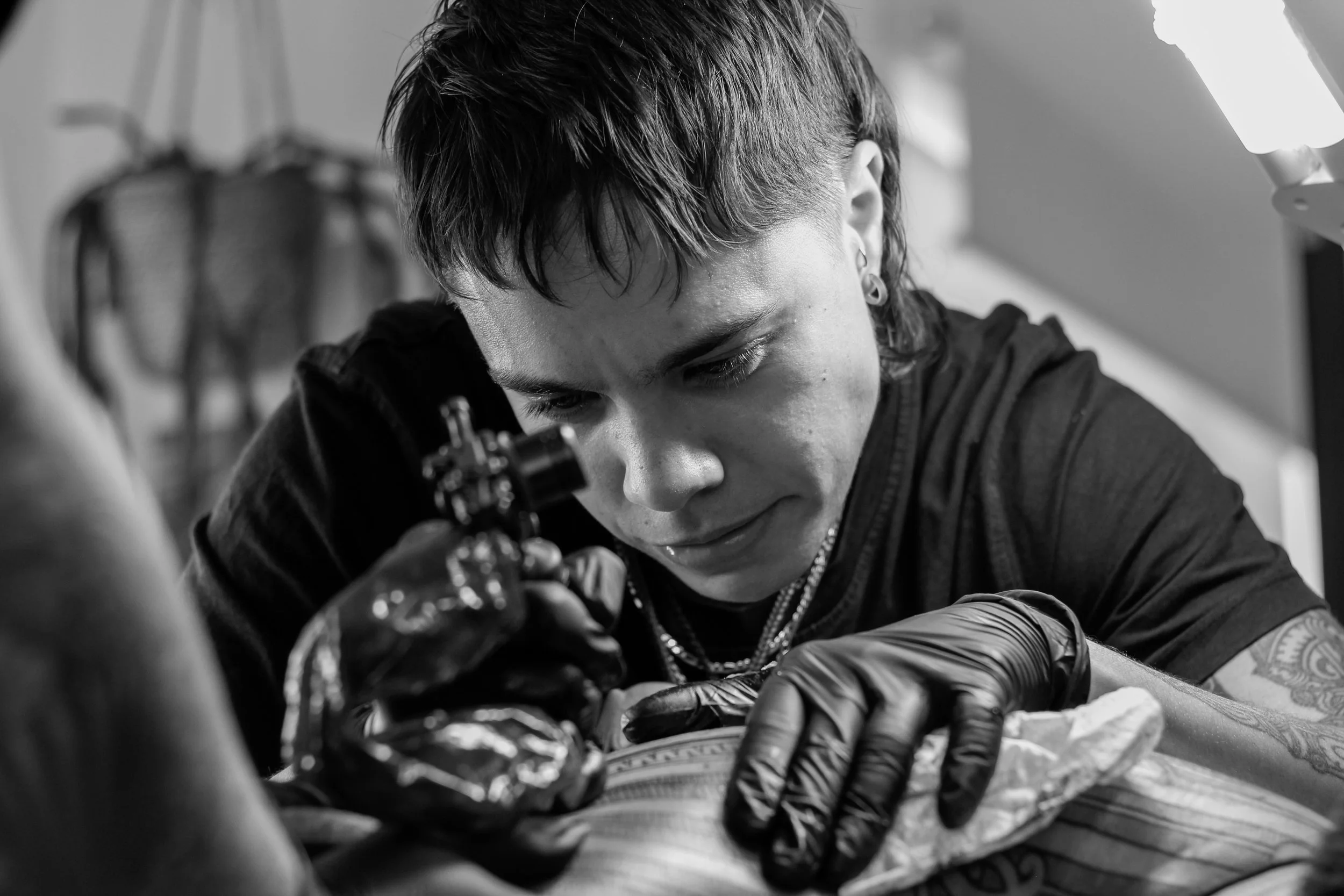
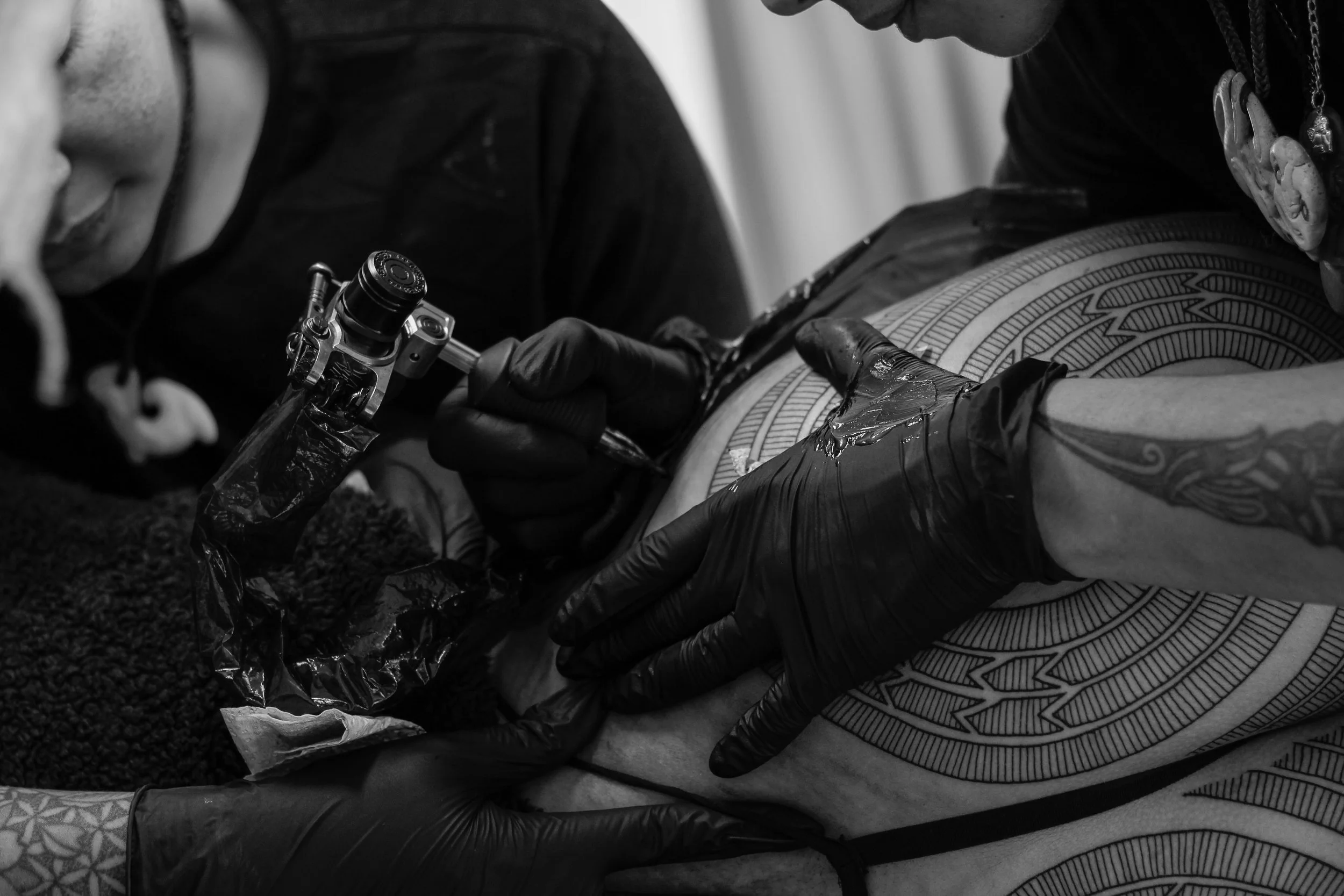
What was the experience like physically, emotionally, spiritually?
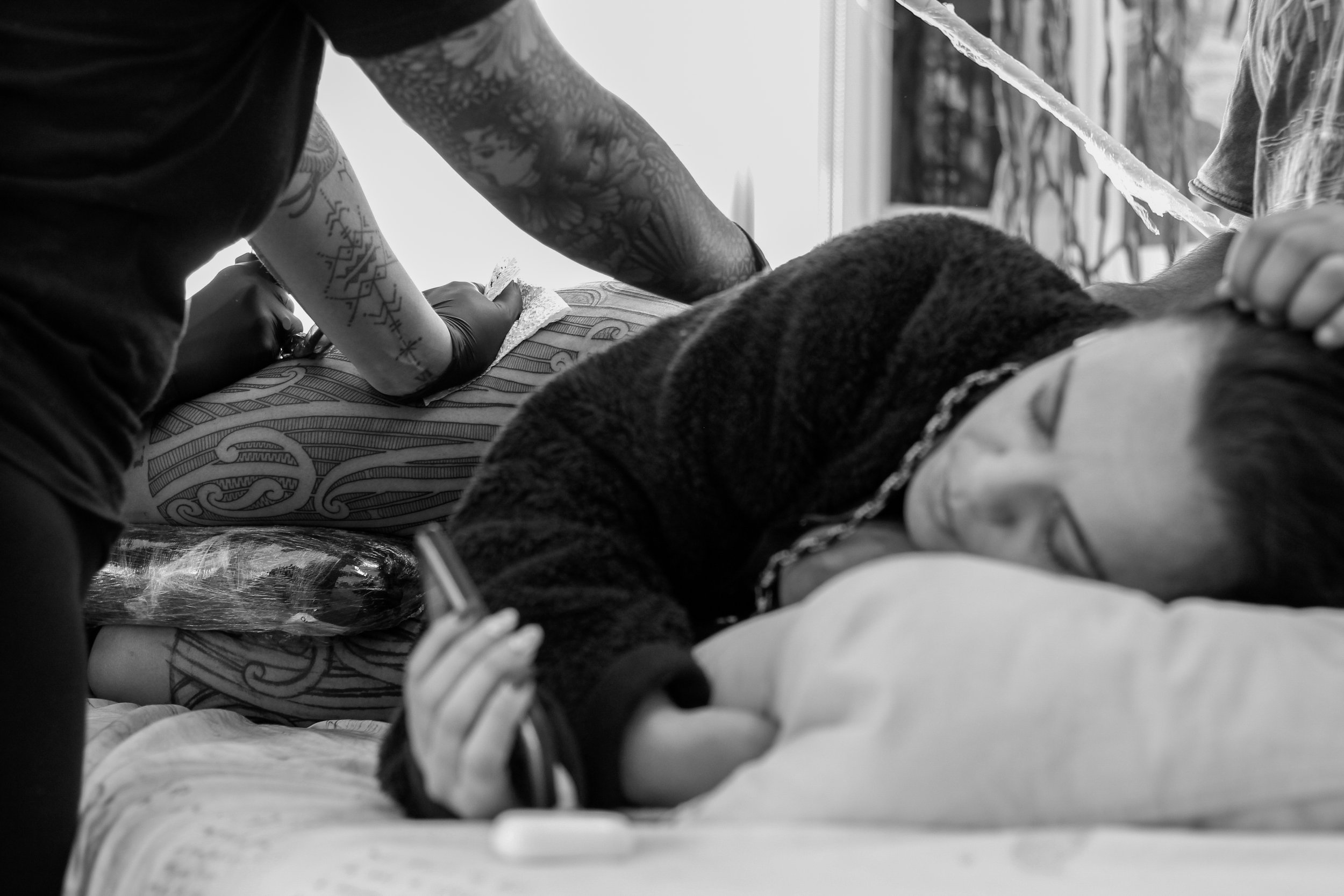
Out of this freaking world. There are so many components to it. There are hard times and there are good times. There are times where you're just floating, times when you're questioning everything, like, ‘why the hell do we do this?’... all your decisions up until that point. But it's also relieving. It does allow you to let go of a lot of physical pain or mental pain or things that you've been holding on to. It's a way to express and let them go, but also to mentally test yoursel. As much as you're trying to be with the pain, you're kind of just feeling it as well. It's very tricky to describe.

It was hard. But you just always know that you're built with the goods to get through it. Everybody has the capacity to do hard things and go through difficult times. You just gotta keep reminding yourself that you can get through it.
The experience for me was like a whirlwind to be honest. It's a bit of a blur... because after the first two days, I was riding that wave and hoping that I would get myself through it, but for the other people around me to help me get through it too, which was a huge ask.
I've not really thought about it too much since to be honest. I’m really reaping the rewards of being on the other side. You definitely are in a way, disconnected from your body, but also very connected to it. There's two sides to it... the physical side and the spiritual side. Cause you're kind of there, but you're not there. You're feeling it, but you're not feeling it. Yeah, it's hard to describe.


What was it like emotionally and spiritually going on that journey?
Emotionally was super hard. You're prepped… you'll get up, the first day is good. You get through it, you're almost like, “f**k yeah, I can do this”. It's cool. You're hyped up. And then it's just a mental game every single day where I would go to bed, close my eyes, and as soon as I opened my eyes, I was back on that table, and back in that space. Every single day, that's what you're going through, you're just constantly in it.
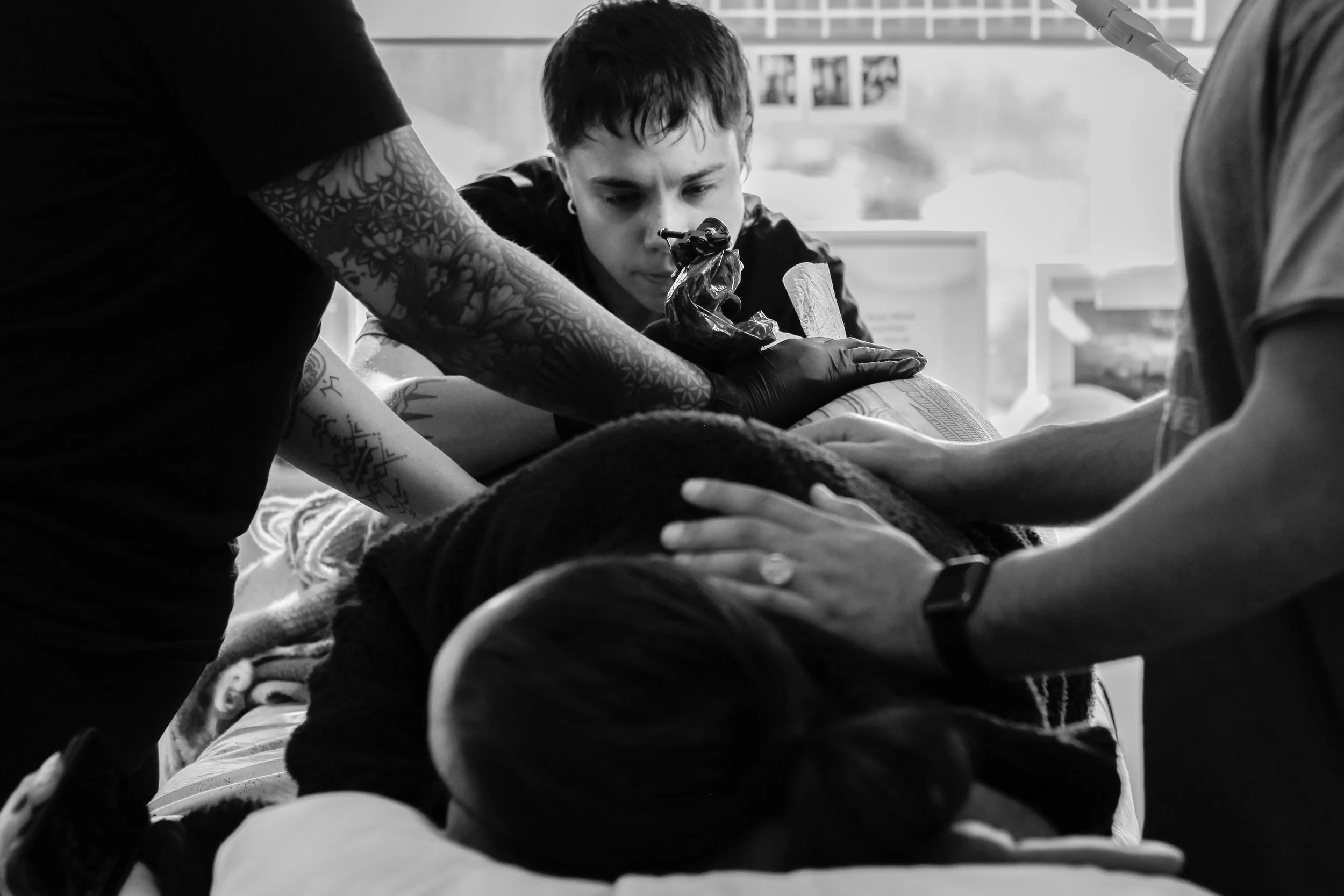
There's not really any room for thinking about anything else other than what's happening on that table. So emotionally it was super hard because you're constantly trying to breathe and keep your heart rate nice and calm and keep your body relaxed. Breathwork was definitely super important, but emotionally, you get to a point where your body has had enough, and you want to keep going, but you physically can't keep going, so it's very frustrating. And you feel the pressure to be a good sitter for the kaitā, so that they can get their mahi done.
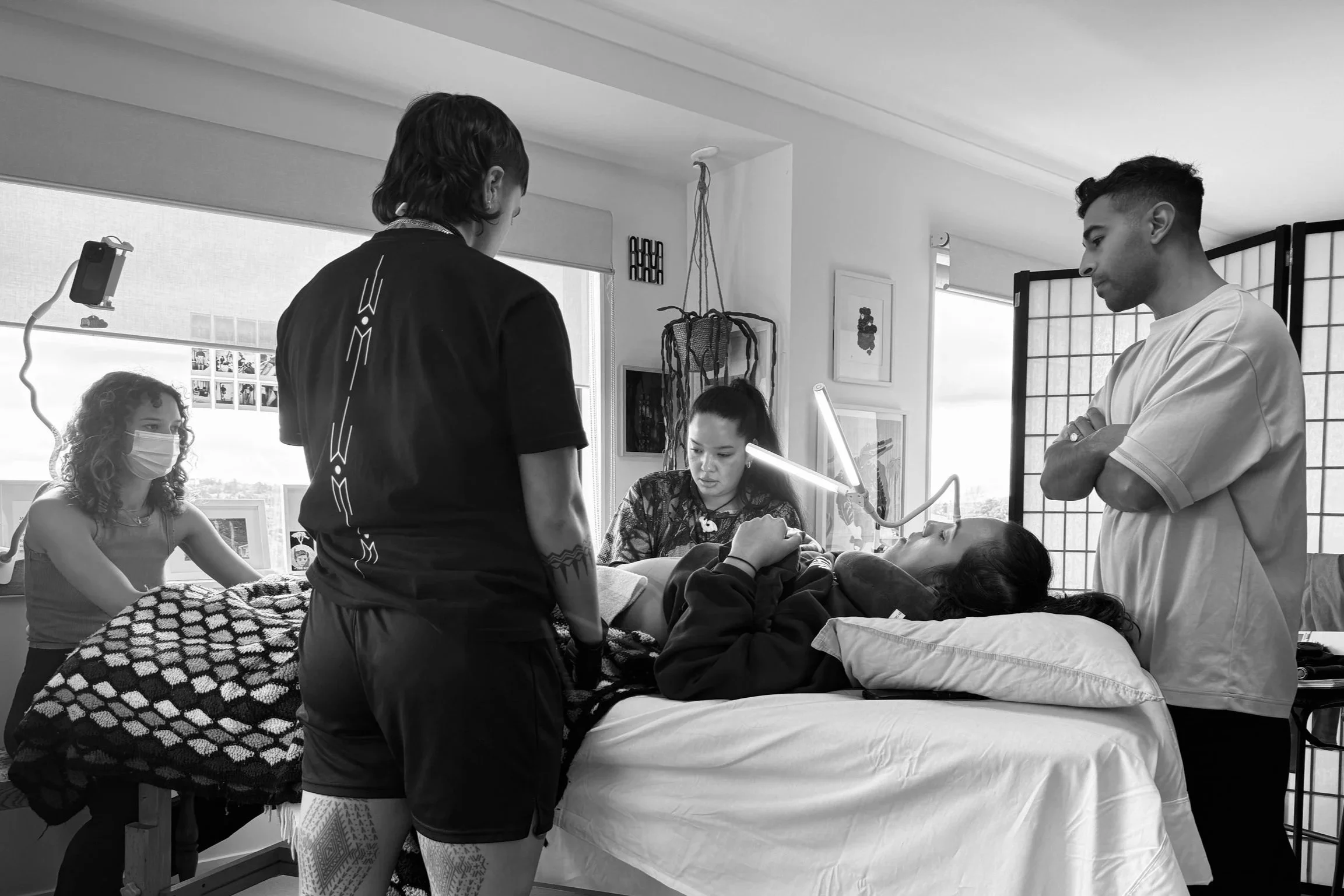
So super, super emotional, especially at the end of the day, because it's like “oh f**k, are we finished yet”, or you just get so wound up by that point that you want to give up, but you've got to keep pushing. It was good having Fern do it. I don't think I would have felt comfortable with anybody else, and it wouldn’t have been the same experience at all. I'm very fortunate for that.
Spiritually you go to Rarohenga but physically you’re here feeling it. It's really weird, you're in two different spaces. When things get really hard, you want to access Rarohenga so you can really come away from the physical and get through the hard parts and the hard pain. But then sometimes you've just got to suck it up and feel it, and take each line, and bear it.

How did you manage the pain?
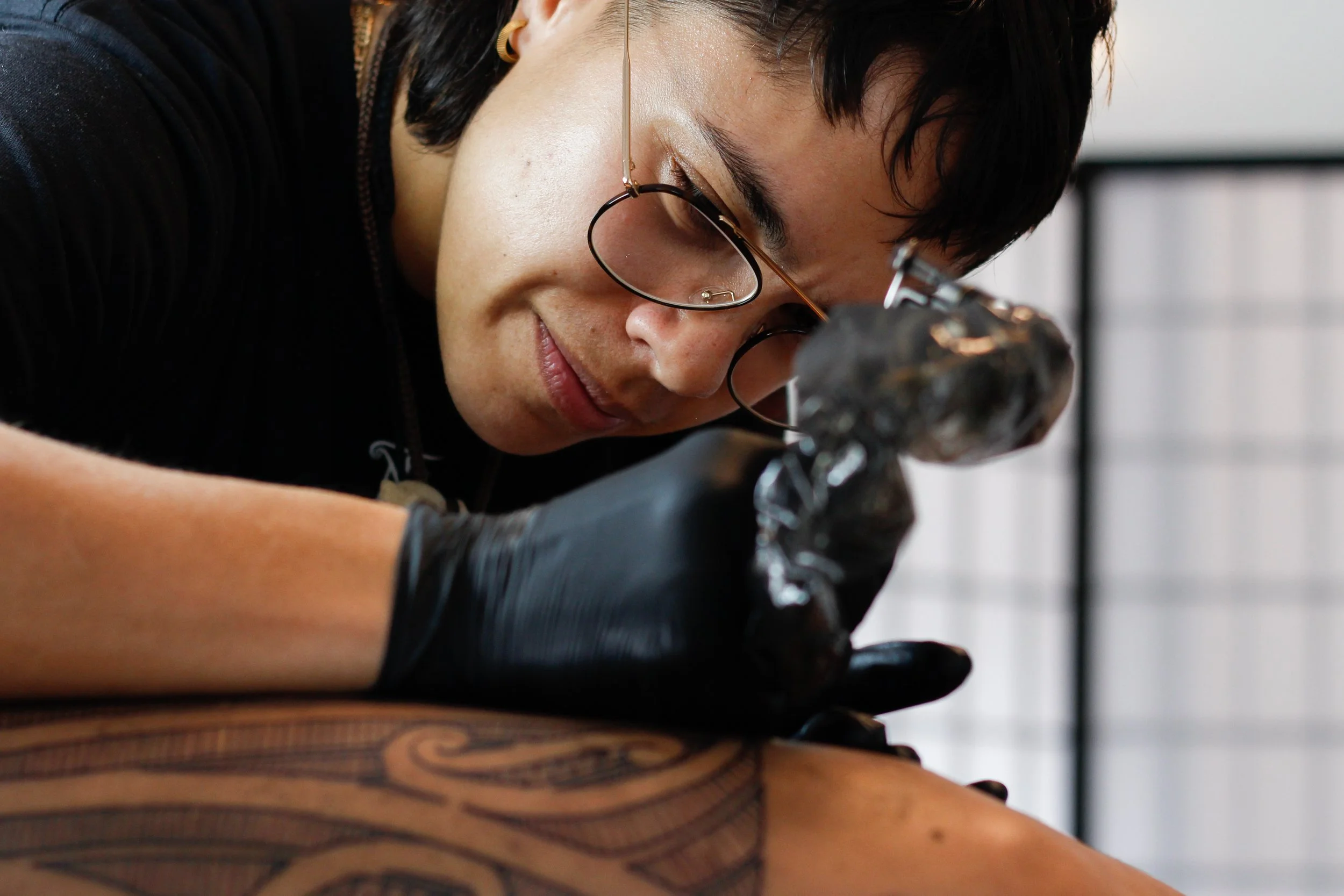
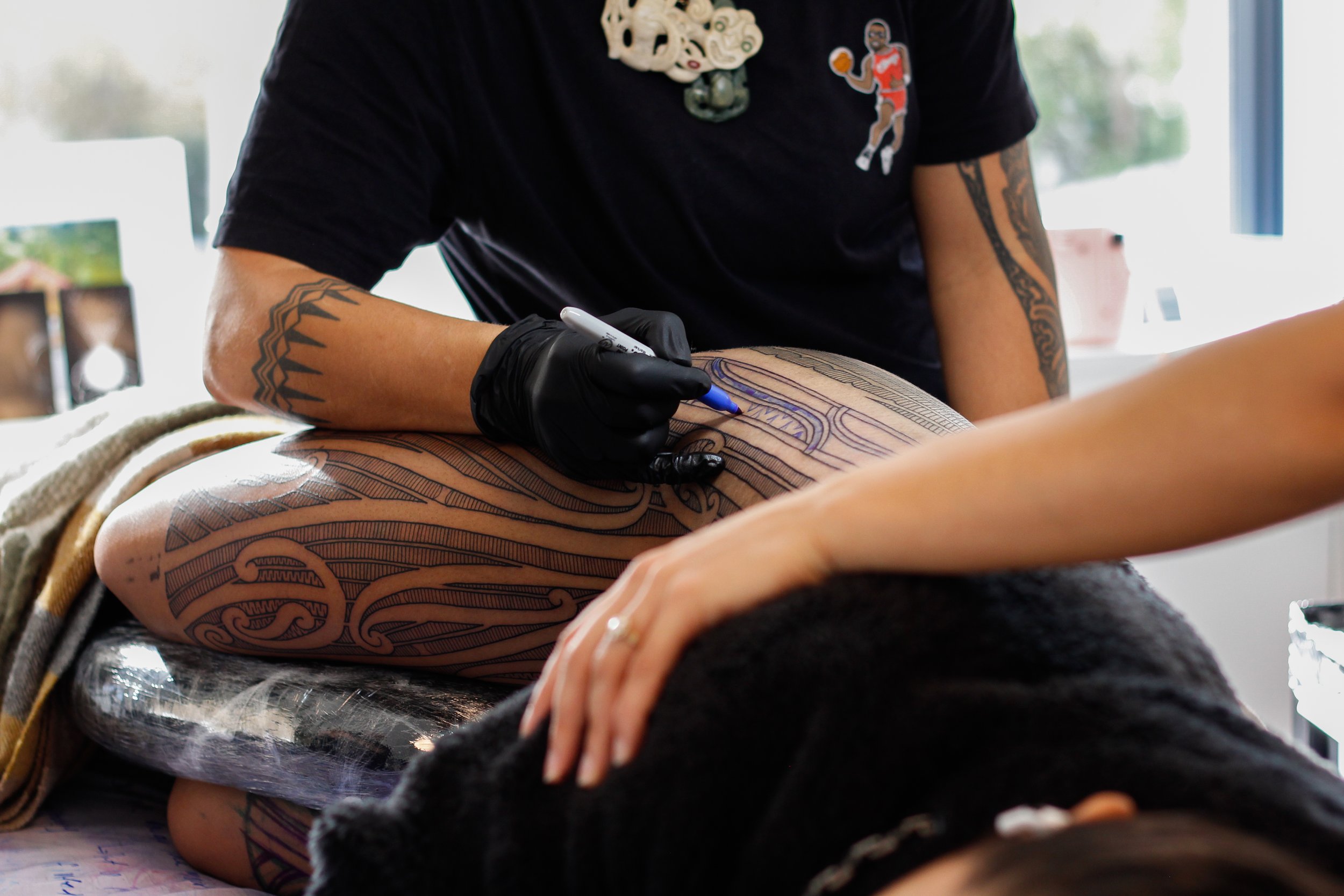
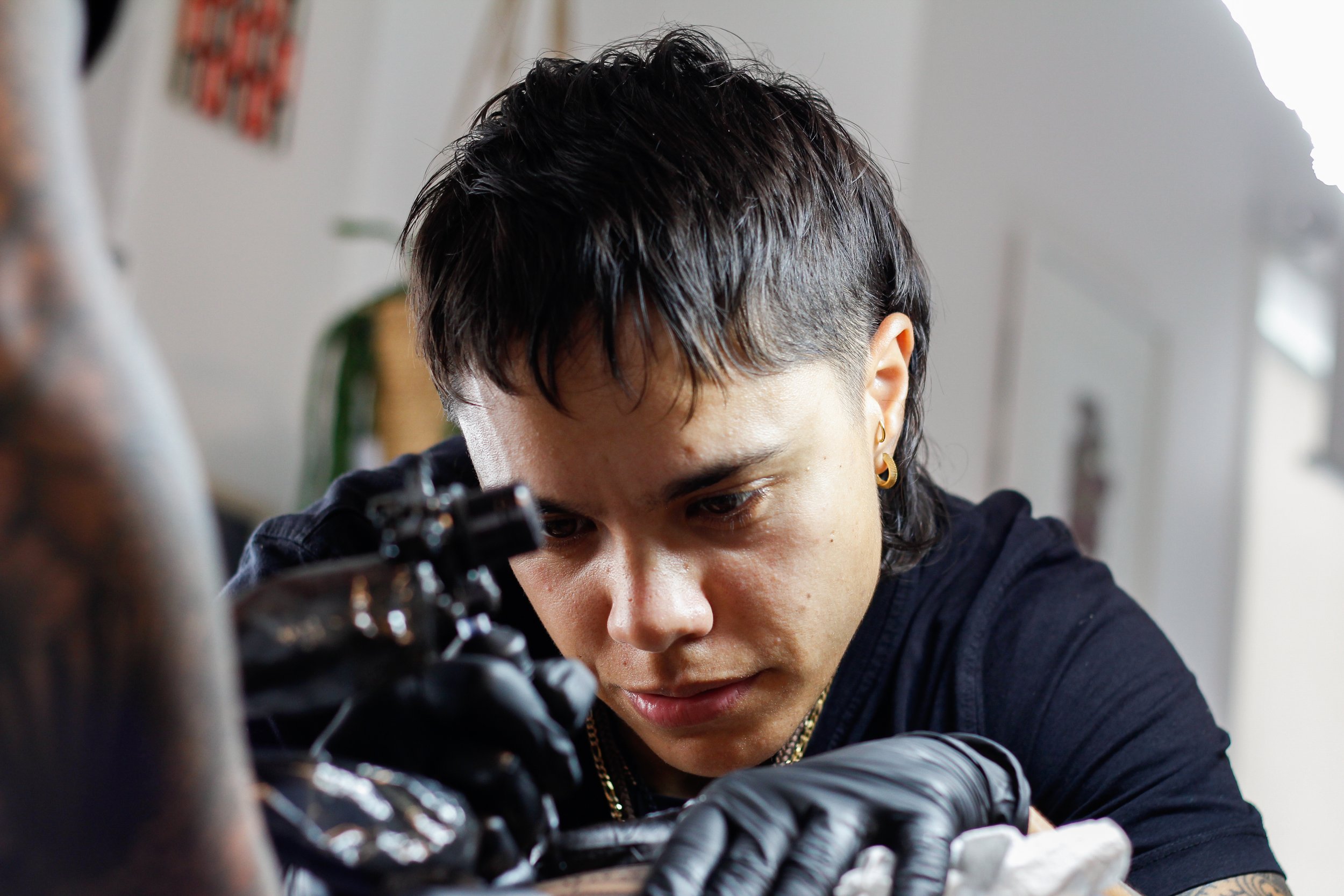
Breathing and distraction. When you start off, the needle is quite comforting. But when you're changing needles, you have to readjust and resettle and lean into it all over again. I started to learn Fern’s flow and when the needle was in or when she was going to reload it with ink or reposition the stretching. I got to know her and her movements and could adjust my breathing and focus according to that. Breathing is the medicine, it helps so much, something so simple.
What was it like receiving pūhoro from your sister?
It was good. I think it was how I would have expected it to be. Honest and kind of like a full circle moment. Especially cause she's our younger sister, who has leached off us for so long... haha [laughing], for her to be able to turn around and give something like that back is pretty crazy. It was sort of no question that she would do it, but yeah, how lucky... who else can say that, not many people can say that. So that's a huge privilege. She was what she needed to be, at every step of the way and each different moment. So yeah, it was pretty special.
What was it like going through that journey over the period of Matariki?
Yeah I was pretty lucky to be honest, that it panned out that way. It was perfect timing for both of us, we were in a good spot and very fortunate that it was on Matariki. Being able to finish the year and start a new year in that space was pretty powerful and really set me up for the year going ahead.
What story does your pūhoro tell?
Fern and I had wānanga about what I wanted it [pūhoro] to represent. One thing that really drew me to it [pūhoro] was Hinekeira, who we learnt a lot about in Kahurangi [Māori medium pathway and unit at Auckland Girls’ Grammar School]. Hinekeira are female assassins who are not only physically strong, but who are real sneaky, and who do all the hard, unseen work in the background to get the big sh*t done.
It’s also about being able to use your feminine energy to your advantage. Knowing your divine female energy and using that to push forward and to make those changes you want to make or to do the work that you want to do. That was a big part for me as to why I wanted a pūhoro as well.
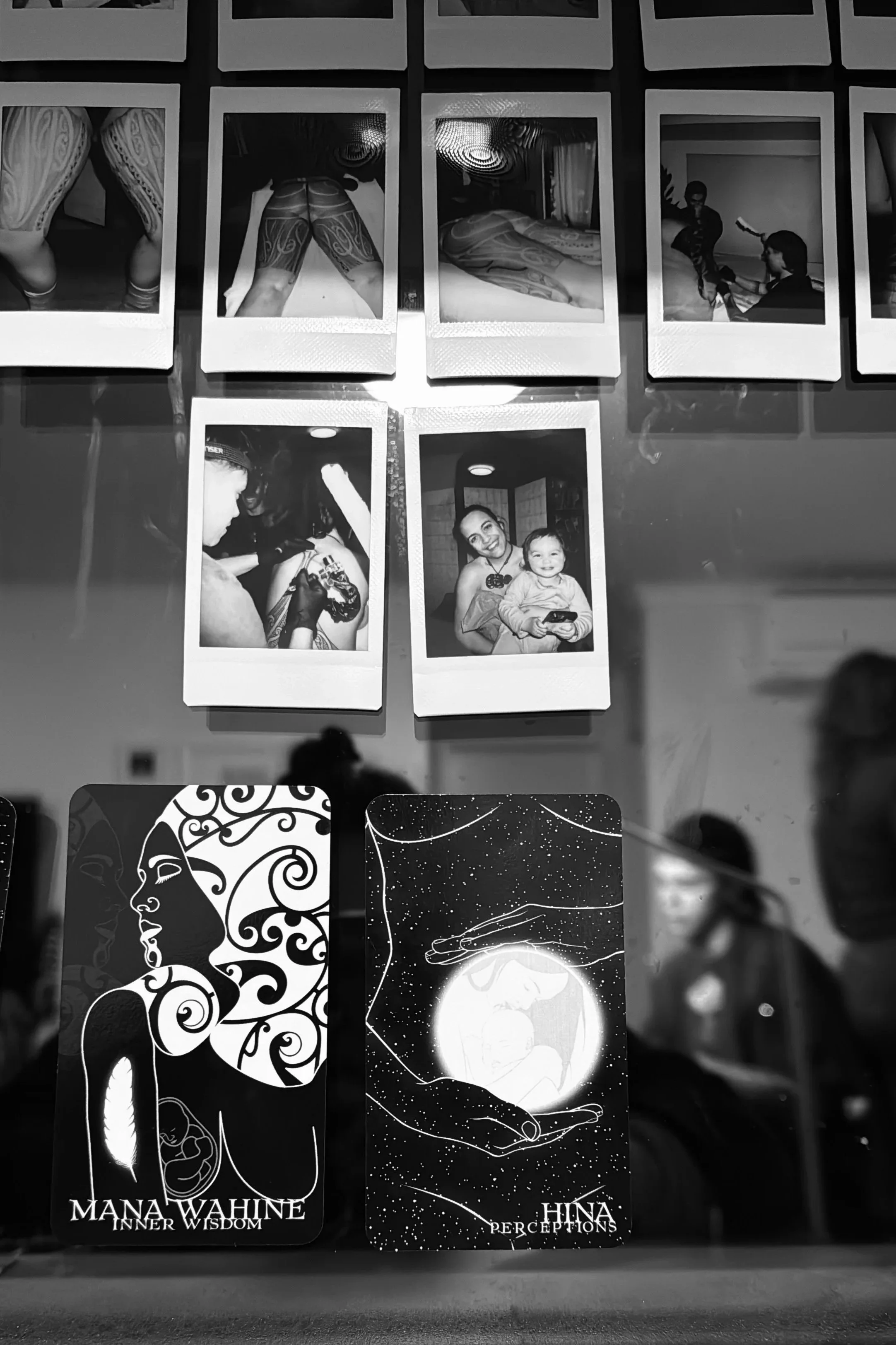
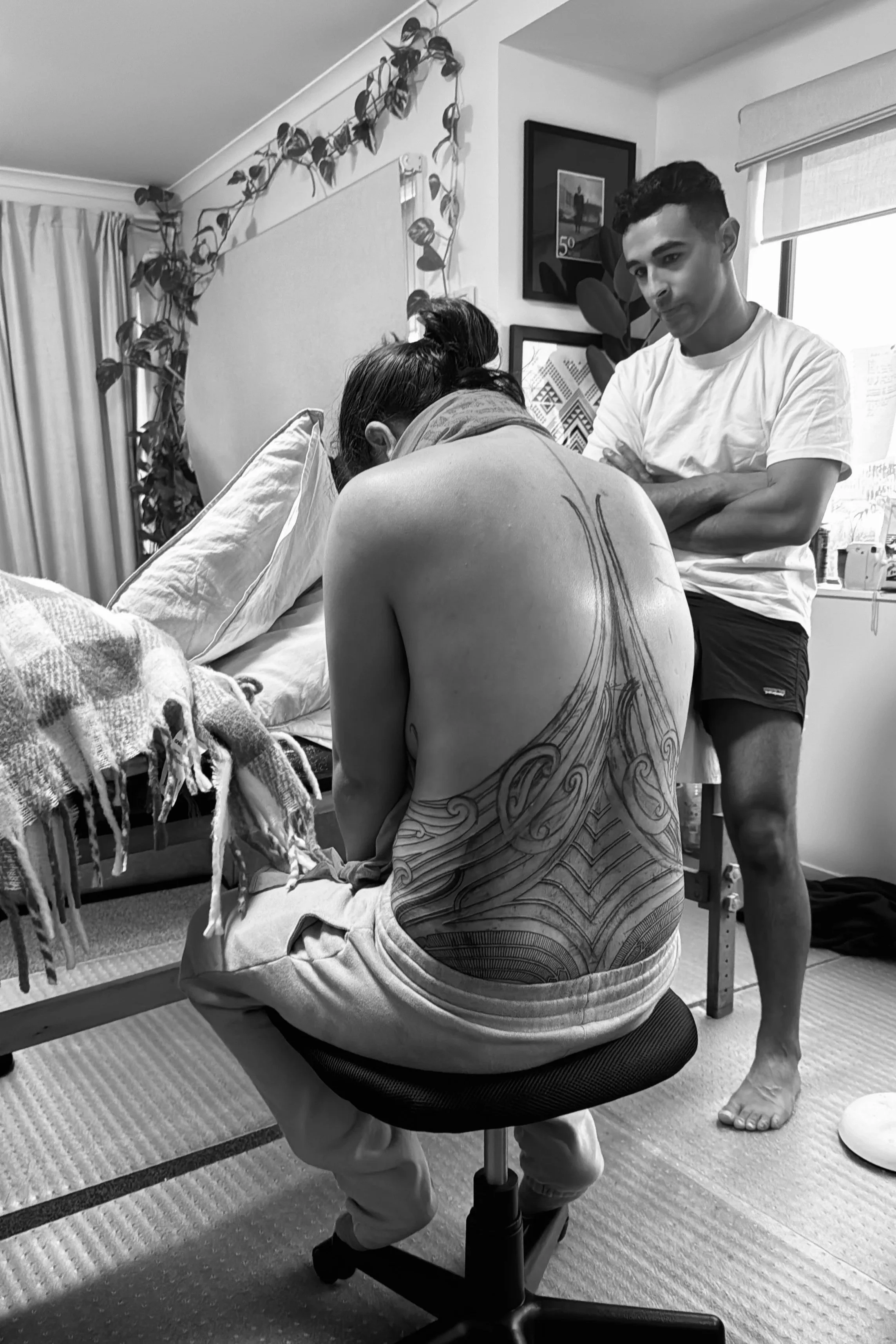
I really wanted to represent Hinerupe, so Fern used quite a lot of the designs inspired by the stories in our marae including the tuatara.
I also wanted it to represent wāhine being able to give birth and the stories of when Māui goes and... you know... figures out that he can't be immortal.
I really resonated with those stories and they're just powerful and inspiring. So being able to have those with me every single day, and walk around knowing that... it's pretty cool.
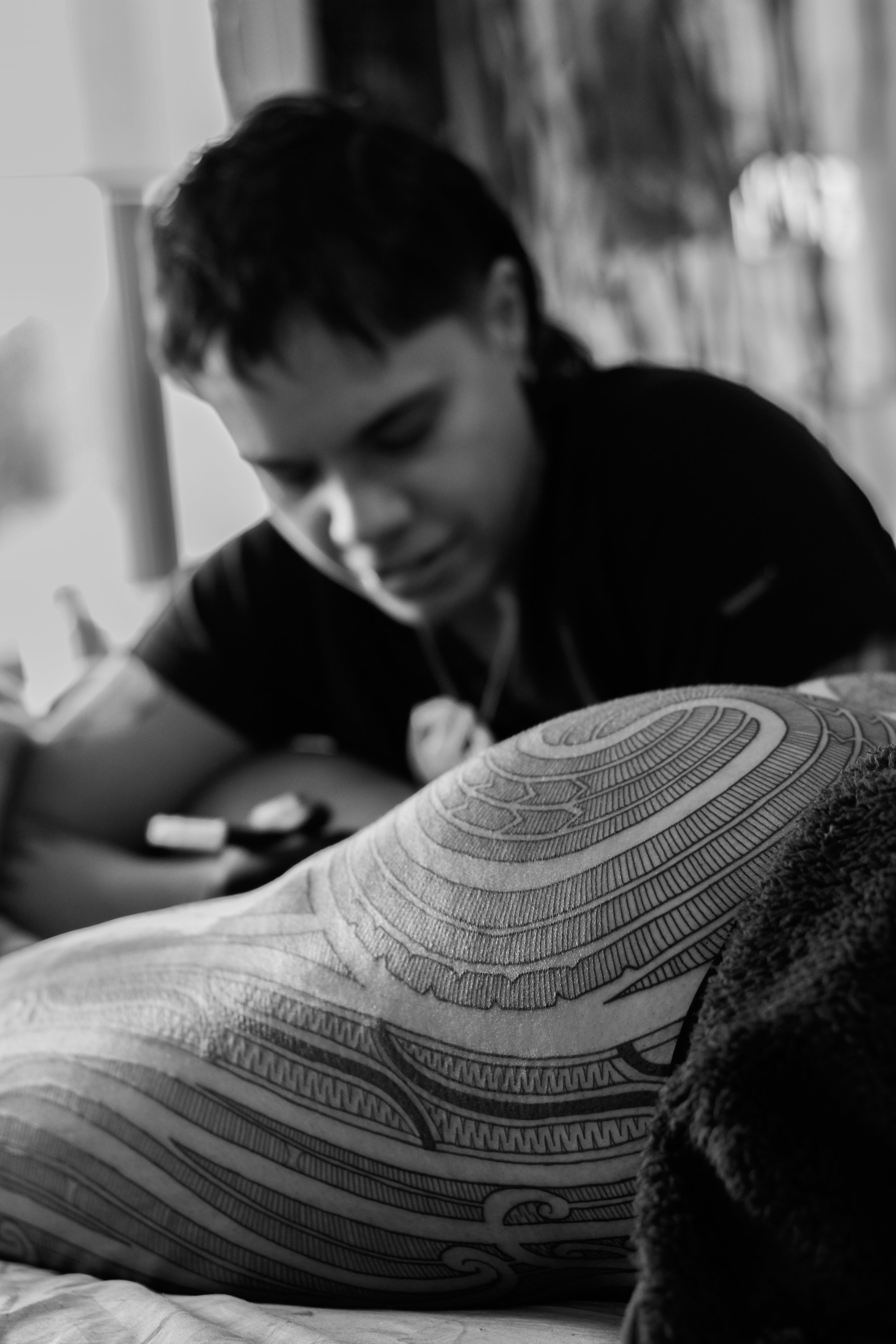
But the pūhoro itself, particularly, the wavy type patterns, and the pūhoro representing wai and water... definitely is a huge healing thing for me, spiritually, mentally, physically.
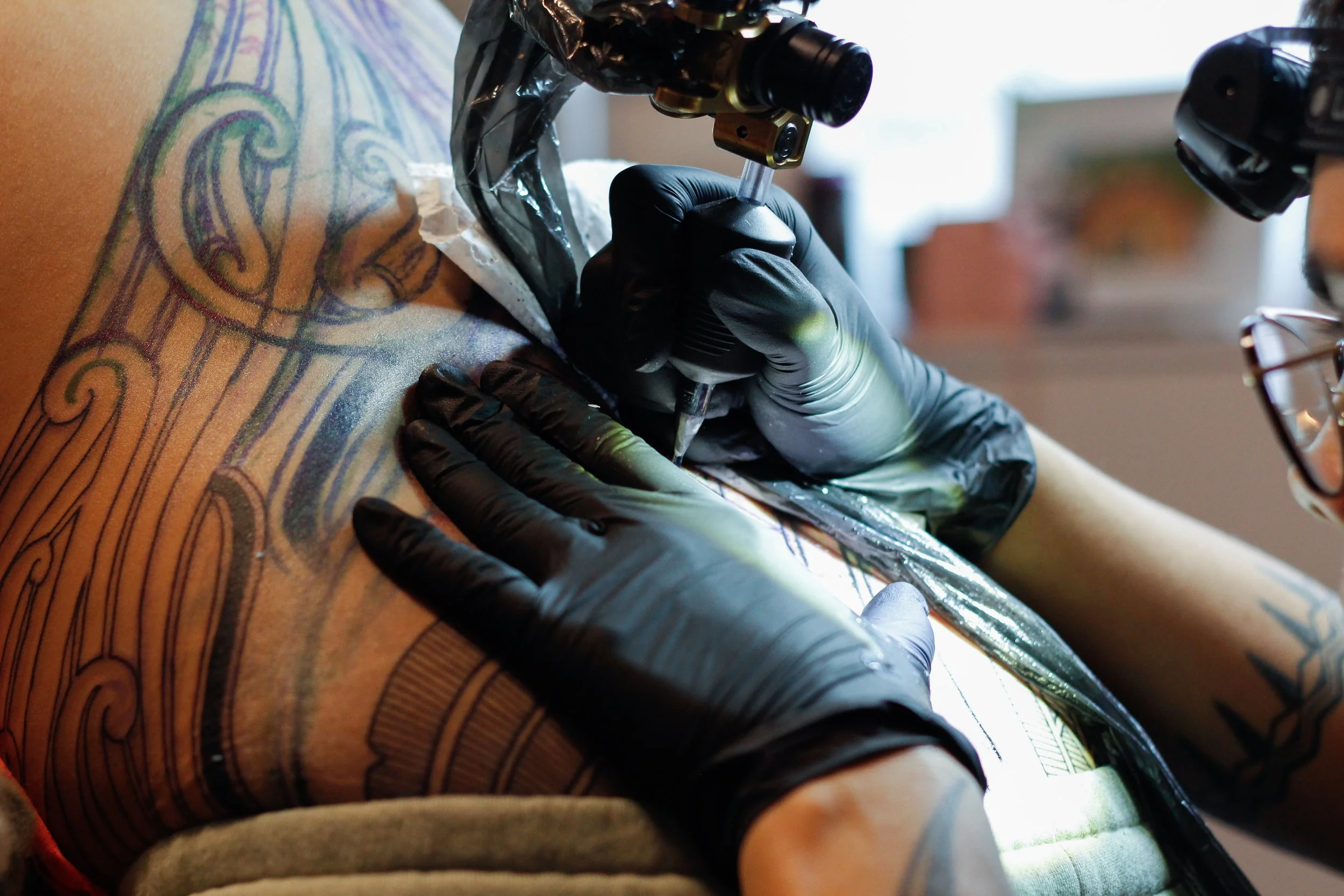
How are the tuatara represented on you?
On the inside of my thighs, I've got one crawling up towards ‘te tara’... which represents the story of Māui as well. That’s the power of the wahine who can give and take life. And then I've also got one coming down on my left thigh going down the other way to represent birth.
What does your pūhoro mean for your identity?
I don't really know how to answer that question. Obviously, it's the physical representation of who I am, on the outside. And being able to carry that, no matter where I am in the world or whatever spaces I am in. It's a constant reminder of where we come from, our purpose, why I do what I do for work or in life. I think it's a reminder of who I am. It's not something for others, so I don't wear it for anybody else. And it's good because, it's not often shown unless I'm swimming or something. So yeah, it's something that's definitely for me, and I get to decide whether it's shown or not.
What has changed for you since receiving your pūhoro?
Hmm... I don't know, I wouldn't say too much. Cause I think it was always there. It's just now on the surface. I don't really think much has changed for me, other than having that experience under my belt, physically, mentally and spiritually, and being able to know what I am capable of. And I can apply that to future scenarios, whether that be... even a trivial thing, like a conflict at work or whatever. I can always reflect back and be like, ‘well, you did this crazy thing, so I'm sure you can get through something just as trivial’. To be honest, I don't think much has changed for me, really.
What's it like being a wahine mau pūhoro in our whānau?
In our immediate family it just makes sense. I don't think there's been any thought otherwise. It doesn't really feel different. I think in my extended family, I don't think they really realise what it is and they probably just think, ‘oh, she's just gone for another tattoo’.
What's it like as a wahine mau pūhoro in Tāmaki Makaurau?
I've had no negative feedback or comments or even any negative energy. I think there's a real shift, particularly in Tāmaki... but in wāhine mau pūhoro. Ever since I saw Chrissy [Looker] with her one, and that was years ago, I was always like, ‘oh yeah, I think that's something that is going to be for me too’. And ever since then, there's just been more and more wāhine, which reassured me more and more that... yeah... this is an option for me, and it is for me. Even if someone said, ‘you shouldn’t be doing this’, I'll turn around and be like, ‘well I'm going to do it anyway’. So yeah, I didn't really think twice about whether other people would think that it’s not for wāhine and ‘wāhine shouldn't be wearing it’. If anything, people have come and asked me about the experience and how they can go about getting it and what steps they should take. So yeah, if I can just be there to keep the movement going, I'm keen.
What's your message to other wāhine who might be considering pūhoro.
Go for it. I reckon if you've got your own reasons about why and what you want it to represent, choose an artist that you connect with and can relate to. I think this is super important to the process. It was for me, personally. I encourage anyone who is keen, wāhine Māori, go and grab it and take it back and reclaim it and, yeah, go for it.
What's next for you and your journey ahead?
It's like the never-ending journey of needing to learn te reo Māori, well not learn it, but relearn it. Just the ongoing reconnection with whakapapa... Hinerupe. If anything, it's more of a motivator to keep going and to take what comes.
Ko te keira a hine e tū nei, i raro i te kamokamo mai i te kāhui o Matariki
Hui e, hui e, hui e
Story Credits
Kaupapa: Amber Ngatai Pūhoro Wānanga
Date: June 2024
Location: Rānui, Tāmaki Makaurau
Kaiwhiwhi & interview: Amber Ngatai
Photography & writing: Deane-Rose Ngatai-Tua
Kaitā: Fern Ngatai (Flows by Rau) supported by Wairingiringi Toi (Tingitatt Native)
People featured: Amber Ngatai, Fern Ngatai, Wairingiringi Toi, Andy Mohareb, Taina Gavelle, Te Rau o Te Huia Tua
Equipment: Canon 60D, 50mm lens